
What is Cloud Infrastructure Management in Cloud Computing?
ACIPL · Information · 03 Nov. 2025
Cloud infrastructure management in cloud computing has evolved into the foundation of our digital age, allowing enterprises to expand, automate, and protect their IT systems effectively. Cloud infrastructure is used by businesses to run services to run apps, control networks, and manage virtual environments with precision. Knowing the basics of cloud infrastructure and how it functions, and the reason it's so important, can help organizations make the right technology choices that promote development as well as digital change.
Understanding Cloud Infrastructure Management in Cloud Computing
Cloud infrastructure management in cloud computing refers to the process of coordinating monitoring, supervising, and sustaining both software and hardware components of a cloud-based ecosystem. This is a reference to storage systems, server networks, as well as virtual machines. Cloud management solutions allow enterprises can benefit from an extremely high level of availability, flexibility, and efficiency in operation. The objective is to make it easier for organizations to manage the cloud IT infrastructures, and provide efficient cloud performance optimization using minimal involvement from manual involvement. Cloud-based platforms and tools, such as cloud infrastructure automation tools, as well as cloud management tools for multiple clouds, play a crucial role in this model.
Components of Cloud Infrastructure Management in Cloud Computing
Every cloud computing environment is built on multiple components that work together to ensure flawless infrastructure performance. These components comprise virtual and physical resources, management software, and security management systems.
- Computing Resources
The cloud is the heart of it all. servers, which host workloads within a virtual environment. Tools for managing cloud infrastructure provide the same efficiency across all virtual machines with precise allocation of resources and monitoring of cloud resource utilization. - Networking Systems
Network management is an integral component of cloud infrastructure management. A well-organized cloud network management system ensures that the connection between private, public as well and hybrid cloud platforms stays safe and stable. - Storage Management
Data is the basis of all digital activities. Cloud storage distribution facilitates the better management of huge data sets by using technology like automated cloud service provisioning, cloud resources management, and automated cloud storage. - Security and Compliance
Cloud access control and cloud compliance management, as well as cloud risk management, ensure the security of data in enterprises. Cloud computing's identity management provides security for data and user authentication as well as secure transactions across different systems.
Why Cloud Infrastructure Management in Cloud Computing Is Essential
- Enhances Performance: Enterprises that utilize Cloud infrastructure management in cloud computing can benefit from agility, transparency, and complete control over the digital infrastructures they use. Centralized management reduces operating costs while maintaining high performance across multiple cloud environments.
- Increased Scalability Cloud Infrastructure Scalability:
Cloud infrastructure scalability guarantees that companies can change their computing resources in response to the demands. - Increased visibility: Cloud infrastructure monitoring provides live insights into the management of virtual infrastructures and analytics on performance.
- Reduced downtimes: Cloud Performance Optimization Techniques detect system failures in advance and guarantee continuous service delivery.
- Lower costs: Cost optimization in cloud infrastructure enables businesses to effectively allocate financial resources using cloud-based services managed by the company.
How Cloud Infrastructure Management in Cloud Computing Works
A successful infrastructure management process uses a methodological approach to ensure that technical operations are aligned with business objectives.
- Step 1: Resource Provisioning
Cloud administrators begin virtual server deployments by using cloud infrastructure automation as well as automated cloud provisioning methods. These methods ensure quick deployment across distributed data centers. - Step 2: Configuration and Deployment
Cloud configuration management allows you to determine the parameters to manage virtual server, network as well and storage device. This setting ensures uniformity across cloud infrastructures that are public and hybrid cloud infrastructures. - Step 3: Performance Monitoring
Continuous cloud monitoring ensures that all computing assets are operating optimally. It can detect anomalies in resource usage and assist in the optimization of cloud performance, and assist in proactive decision-making. - Step 4: Security Enforcement
Secure cloud storage and cloud data protection systems protect data from unauthorized access. Businesses use advanced tools to monitor cloud security and enforce corporate-level encryption policies. - Step 5: Maintenance and Optimization
Regular audits and management of IT infrastructure in cloud computing guarantee continuous operation. Cloud service management platforms assist in tuning the performance of applications and enhancing their performance.
When to Implement Cloud Infrastructure Management
Cloud infrastructure management in cloud computing is a must for organizations. Management for cloud computing is in the process of scaling their digital transformation plan or integrating complex multi-cloud workloads that are complex.
- Cloud Migration Services: Smooth transitions from data centers that are on-premises to cloud-based platforms that require structured management.
- To expand their enterprise: Companies expanding globally depend on cloud management systems for enterprise to provide centralized management of their cloud.
- When deploying IaaS Models: Infrastructure as a Service (IaaS) uses standard frameworks for controlling resources and automated workloads.
- Within High-Security Industries:
Banks, healthcare, and government agencies rely on cloud compliance in order to satisfy the requirements of regulatory agencies.
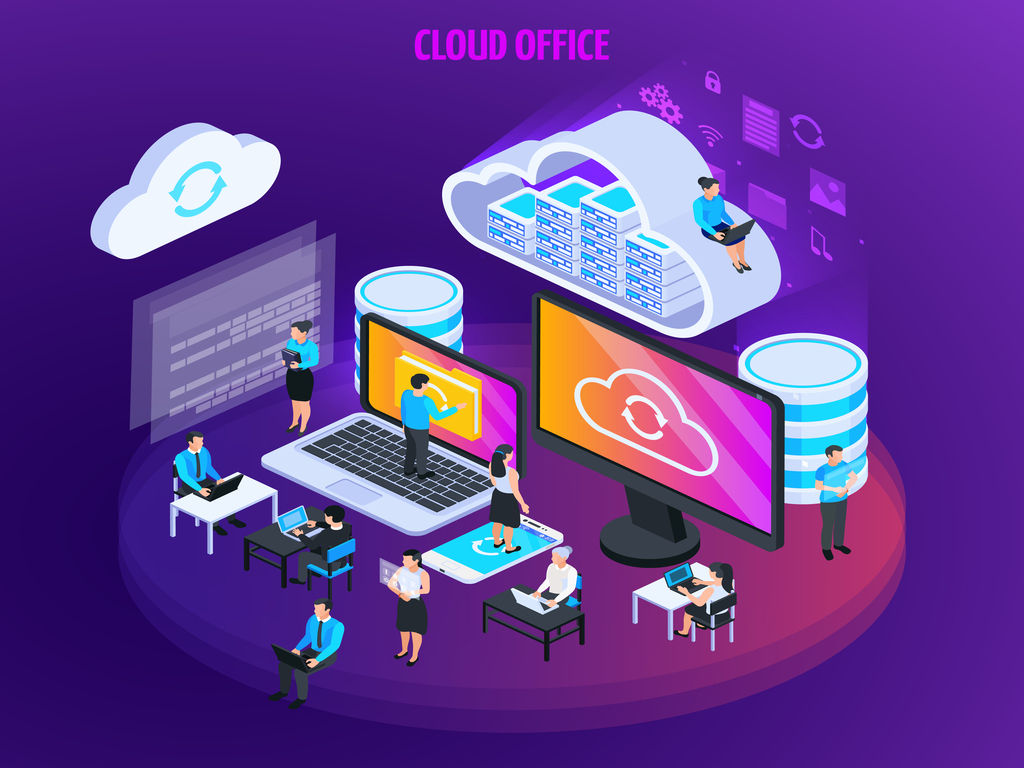
Tools Used for Cloud Infrastructure Management in Cloud Computing
A broad range of tools for managing cloud infrastructure allows administrators to manage, automate, and control their infrastructures efficiently.
Popular Tools Include:
- AWS CloudFormation: Supports cloud infrastructure automation for large-scale deployments.
- Microsoft Azure Management Tools: Offer complete cloud resource management as well as cost transparency.
- Google Cloud Platform (GCP) Console simplifies multi-cloud management and performance monitoring.
- VMware vRealize Suite offers an extensive set of virtual infrastructure management functions.
- OpenStack Powers Private Cloud Management and Hybrid Cloud Infrastructure.
Benefits of Cloud Infrastructure Management in Cloud Computing
- 1. Centralized Control
Cloud platform management provides unifying dashboards for all computing operations, which improves coordination between IT as well as DevOps teams. - 2. Automation Efficiency
Automation eases the burden of manual work by incorporating AI-driven decision-making, automated cloud provisioning, cloud access control, and the management of configuration. - 3. Security Strengthening
With active security monitoring of cloud infrastructure data breaches can be ward off data breaches with efficiency through constant monitoring and management of identity for cloud computing. - 4. Improved Resource Utilization
Strategies for utilizing cloud resources guarantee an equitable distribution of workloads as well as efficient utilization of storage and networking infrastructure. - 5. Flexibility Across Cloud Models
If you are using a private, public cloud infrastructure, or a hybrid cloud, the central frameworks guarantee consistent monitoring of performance and policy enforcement.
Cloud Infrastructure Security and Governance
Security is the basis of successful Cloud infrastructure management in cloud computing. Each layer of operation - from access to the network to encryption of storage-is controlled by standard protocols that ensure integrity and conformity.
- Cloud Infrastructure Security: Involves setting permissions, firewalls, and monitoring of threats.
- Cloud Compliance Management: Ensures that all cloud-based services are compliant with the legal and regulatory requirements.
- Cloud Risk: Management assesses weaknesses and creates contingency strategies.
- Cloud Infrastructure Governance: Offers an approach driven by policy to ensure transparency and uniformity of the operation.
Challenges in Cloud Infrastructure Management
Despite the advancements in cloud infrastructure management in cloud computing is not without its challenges in implementation.
- Complex multi-cloud operations: coordination of operations across multiple cloud providers requires seamless management of multi-clouds.
- Monitoring gaps: Fragmented monitoring can result in inefficiencies when it comes to monitoring of cloud infrastructure in real-time.
- Problems with Cost Control: Without cost-optimization on cloud infrastructure, businesses might be in the position of having budgetary overruns.The risk of locking in a vendor too much on one provider can limit your the amount of flexibility.
- Compliance Overheads: As data protection laws evolve, maintaining compliance becomes demanding for enterprise cloud management teams.
Best Practices for Cloud Infrastructure Management in Cloud Computing
Best practices are the best way to ensure stable and long-term cloud stability as well as performance.
- Implement cloud infrastructure automation to ensure consistent and repeatable procedures.
- Make use of AI-based alerts for continuous cloud security monitoring.
- Maintain cloud performance optimization by conducting benchmark audits.
- Make sure that you are always in compliance with automated monitoring.
- Implement multi-cloud and hybrid cloud strategies to increase flexibility.
- Connect cloud IT infrastructures seamlessly into existing enterprise systems to maximize the capacity of your cloud IT infrastructure. These measures improve operational predictability and improve the digital transformation results.
The Future of Cloud Infrastructure Management
As the technology advances rapidly, automation and virtualization cloud computing, the world of technology management is changing into an AI-driven, intelligent ecosystem. Machine learning and predictive analytics have been progressively automating manual tasks and facilitating cloud infrastructure scalability across different industries.
The cloud of the future is likely to be focused on:
- Self-healing infrastructure.
- Intelligent load balancing using AI.
- Advanced governance models to manage cloud infrastructure.
- Lightweight platforms to support the hybrid cloud.
Conclusion
Cloud infrastructure management in cloud computing is recognized as the foundation in contemporary IT operations, which combines the management of automation, governance and scalability into an integrated digital strategy. With the proper use of cloud infrastructure, companies can gain more control over costs, performance and also compliance. For startups as well as large-scale enterprises, using reliable cloud management solutions will guarantee steady growth in a rapidly changing technological landscape.
The implementation in cloud IT infrastructures does not just streamline routine operations, but allows businesses to create with confidence and speed.
For more information on our services, check out the Google Business Profile or connect with us via Google Maps.