From Legacy to Modern: A Practical Approach to System Modernization
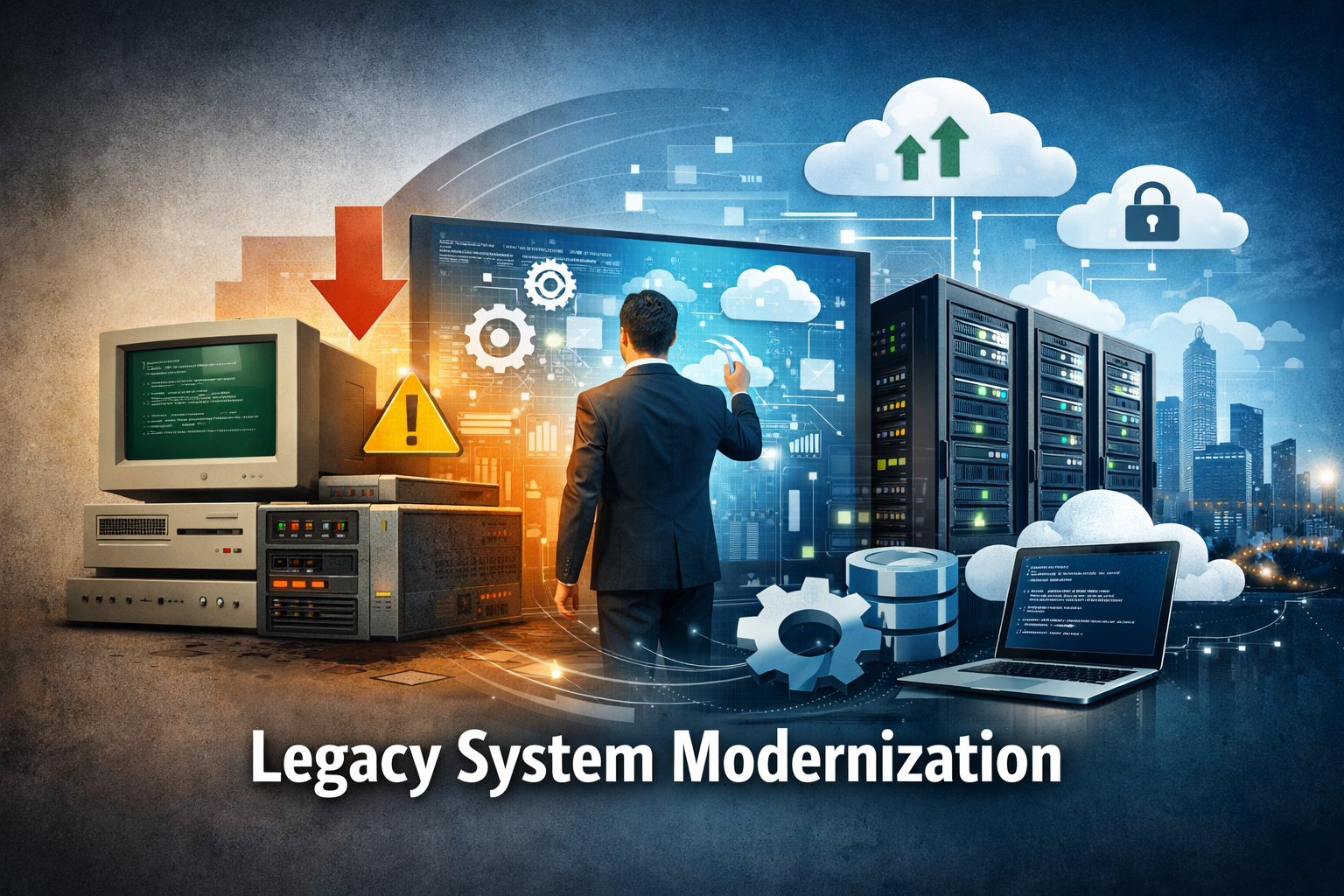
Legacy system modernization has become essential for companies that want to remain efficient, secure, and scalable. Many organizations still rely on systems designed years ago, which now struggle to meet modern business and technology demands.
What Is Legacy System Modernization?
Legacy system modernization is the process of updating, transforming, or partially replacing outdated software and platforms so they align with current business and technology needs. It does not always require a full replacement—often a phased or targeted upgrade delivers better results with lower risk.
Who Needs Legacy System Modernization?
Businesses of all sizes benefit from modernization. Enterprises with ERP, mainframes, or custom applications often face complexity, while SMBs encounter performance and growth limitations.
Why Legacy System Modernization Matters
Performance & Reliability
Older systems are slower, harder to scale, and more prone to failures. Modernization improves stability and performance across the company IT infrastructure.
Security & Compliance
Legacy platforms often lack modern security controls. Modernization enables encryption, access control, logging, and compliance readiness.
Cost & Technical Debt
Maintaining outdated systems is expensive. Modernization reduces technical debt and lowers long-term operational costs.
When Should You Modernize?
Frequent failures, rising maintenance costs, vendor end-of-support, or business growth constraints are strong indicators that modernization is required.
How Legacy System Modernization Works
Assessment
Evaluate dependencies, security gaps, performance bottlenecks, and critical workflows.
Modernization Approaches
- Application refactoring
- Re-engineering
- Re-architecture
- Monolith to microservices
- API enablement
Migration & Cloud Adoption
Cloud or hybrid migration enables scalability, resilience, and cost optimization, depending on compliance needs.
Business Benefits
- Faster innovation
- Improved security posture
- Better scalability
- Future-ready IT infrastructure
Conclusion
A structured approach to legacy system modernization strengthens IT infrastructure, improves efficiency, and enables sustainable growth.